
Springs for firearms are vital components that play a fundamental role in the operation and performance of various types of guns, including pistols, rifles, and shotguns. They are responsible for critical functions such as loading, firing, and ejecting cartridges. In this article, you will learn how important the springs for firearms are and receive tips on choosing them.
I. Role of Springs for Firearms
Springs play a critical role in the operation of firearms, providing the necessary tension and energy to perform key functions reliably. These functions include loading ammunition, firing the weapon, and ejecting spent cartridges. Without properly functioning springs, a firearm can experience a range of issues, including jams, misfires, and failure to eject.
II. Importance of Quality Springs
Opting for high-quality springs is crucial, as it directly impacts performance and safety, and inferior ones can result in a range of malfunctions, including failures to feed or eject. These malfunctions not only hinder the firearm’s performance but can also pose serious safety risks, particularly in critical situations such as self-defense or combat scenarios.
In semi-automatic pistols, the slide is typically held in the closed position by a slide stop spring. This spring ensures that the slide locks back after the last round is fired and that it releases smoothly when a new magazine is inserted. Even smaller springs, such as those found in trigger mechanisms, play a vital role in firearm function. These springs provide the tension necessary to reset the trigger after each shot, allowing for rapid and consistent follow-up shots.
Quality springs are designed and manufactured to meet stringent standards, ensuring consistent and reliable operation of the firearm. They are made from durable materials that can withstand the stresses and pressures of regular use, providing a longer service life compared to cheaper, lower-quality alternatives. Furthermore, quality springs are engineered to deliver consistent tension and performance over time. This consistency is essential for maintaining the firearm’s reliability and accuracy, especially in situations where split-second decisions can make a difference.
Investing in high-quality springs for firearms is not just about improving performance; it’s also about ensuring the safety of the user and those around them. Inferior springs can compromise the functionality of the firearm, increasing the risk of accidents or malfunctions. By choosing quality springs, firearm owners can have confidence in their equipment’s performance, knowing that it has been designed and manufactured to the highest standards.
III. Common Types of Springs for Firearms
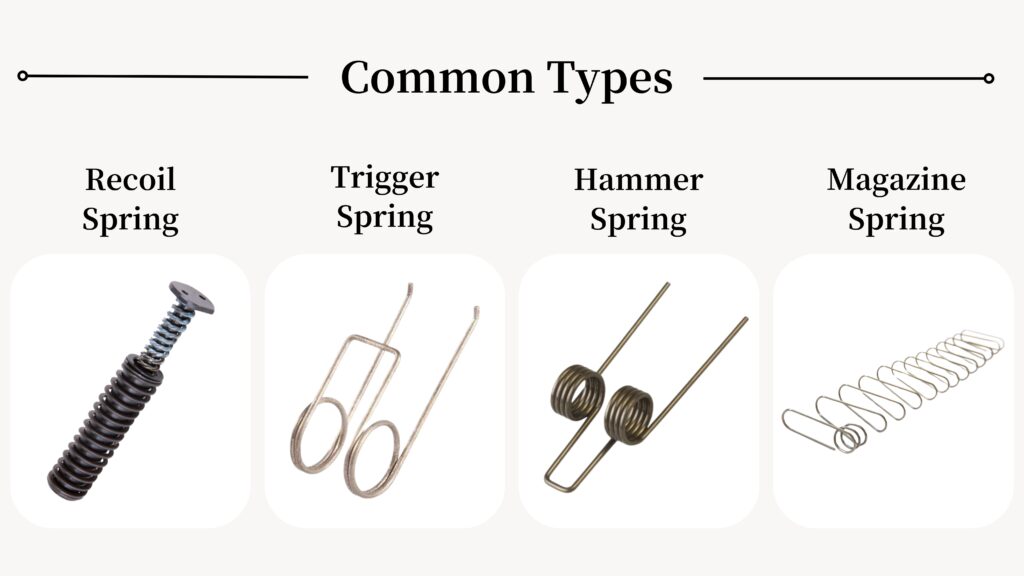
Firearms rely on various types of springs, each designed for a specific function crucial to the weapon’s operation. Among the most common are:
Recoil Springs
These springs manage and absorb the recoil energy generated when a round is fired, helping to control the movement of the slide or bolt, and ensuring that it cycles smoothly and reliably. If the recoil spring is worn or damaged, it can lead to erratic cycling of the action, affecting the firearm’s accuracy and reliability.
Trigger Springs
Trigger springs are responsible for resetting the trigger mechanism after each shot, preparing it for the next firing cycle. They must provide enough tension to reset the trigger efficiently, ensuring rapid follow-up shots.
Hammer Springs
Hammer springs provide the force necessary to strike the firing pin, igniting the primer and firing the cartridge. They must be strong enough to reliably ignite the primer but not excessively strong to prevent unnecessary wear on the firearm’s internal components.
Magazine Springs
These springs apply tension to the magazine follower, pushing it upwards to feed rounds into the chamber. A reliable magazine spring is crucial for ensuring consistent feeding and preventing jams or misfeeds.
Other types of springs for firearms, such as extractor springs, ejector springs, and sear springs, also play essential roles in firearm operation. Each spring must be selected based on its intended function, ensuring compatibility with the firearm and its components. For example, a pistol’s recoil spring must match the slide’s weight and the ammunition’s power level to ensure proper cycling. Similarly, a magazine spring must provide enough tension to reliably feed ammunition without causing excessive resistance.
IV. Factors to Consider When Selecting Springs for Firearms
Selecting the right springs for firearms involves a careful consideration of material, tension, compatibility, and intended use. By choosing high-quality, properly matched springs, firearm owners can ensure optimal performance, reliability, and safety.
a. Material Considerations:
- High-quality materials like stainless steel or chrome silicon offer durability and resilience.
- Ensure the spring can withstand the stresses and pressures of firearm operation.
b. Tension Matching:
- Match the tension or strength of the spring to the firearm’s specific requirements.
- Avoid springs that are too weak, leading to failures to feed or eject, or too strong, causing excessive wear on components.
c. Compatibility Check:
- Ensure the spring is designed to fit and function correctly within the firearm’s mechanism.
- Consider factors like length, diameter, shape, and interaction with other components.
d. Examples of Specific Considerations:
- In semi-automatic pistols, the recoil spring must be the correct length and tension for proper slide cycling.
- In rifles, the magazine spring must provide enough tension for reliable feeding without causing issues.
e. Environmental and Intended Use Factors:
- Consider environmental conditions, such as corrosion resistance for harsh environments.
- Tailor springs to the firearm’s intended use; e.g., lighter, higher-tension springs for competition firearms.
V. Signs of Worn or Defective Springs for Firearms
Signs of worn springs for firearms include diminished tension, inconsistent behavior, or outright failure to function as intended. Continuing to use firearms with worn or defective springs can result in serious malfunctions and should be addressed promptly. Specific indicators of worn or defective springs can vary depending on the type of spring and its function:
Reduced Tension
Springs that have lost their tension may no longer perform their intended function effectively. For example, a recoil spring with reduced tension may result in the slide not cycling fully, leading to failures to eject or feed.
Erratic Behavior
Worn or defective springs can cause firearms to behave unpredictably. This can manifest as failures to fire, failures to feed, or even accidental discharges due to improper trigger reset caused by a weak trigger spring.
Failure to Function Properly
The most obvious sign of a worn or defective spring is a failure of the firearm to function as expected. This could include a failure of the hammer to strike the firing pin with sufficient force, a failure of the magazine to feed rounds reliably, or a failure of the slide to lock back after the last round is fired.
Regular inspection and maintenance of springs for fireamrs are essential to prevent these issues. Springs should be replaced at the first signs of wear or when they no longer meet the manufacturer’s specifications. This proactive approach helps maintain firearm safety and performance, ensuring that the firearm operates reliably when needed.
VI. How to Maintain and Replace Springs
Maintaining and replacing springs in firearms is crucial for their longevity and optimal performance. Regular maintenance, including inspection and cleaning, helps identify worn or damaged springs early, preventing potential malfunctions and ensuring the firearm operates safely.
When maintaining springs, it’s essential to:
- Inspect Regularly: Check for signs of wear, corrosion, or damage. Pay attention to changes in tension or function.
- Clean Properly: Remove dirt, debris, and residue that can affect the spring’s performance. Use appropriate cleaning tools and solvents.
- Lubricate Carefully: Apply a light coat of firearm-specific lubricant to help reduce friction and wear. Avoid over-lubrication, which can attract dirt and debris.
- Store Correctly: Store firearms in a dry, cool environment to prevent rust and corrosion, which can affect spring performance.
When replacing springs, it’s crucial to:
- Use High-Quality Replacement Parts: Choose springs that meet or exceed the manufacturer’s specifications. Inferior quality springs can lead to malfunctions and safety issues.
- Follow Manufacturer’s Guidelines: Consult the firearm’s manual or manufacturer’s instructions for proper installation and tension specifications.
- Consider Upgrades: In some cases, upgrading to higher-quality or performance-enhancing springs can improve firearm reliability and function.
For example, replacing a worn recoil spring in a pistol can restore proper slide cycling and reduce felt recoil. Upgrading to a stronger hammer spring in a revolver can improve ignition reliability, especially with harder primers.
By following these maintenance and replacement guidelines, firearm owners can ensure their springs remain in optimal condition, contributing to safe and reliable firearm operation.
VII. Conclusion
In conclusion, the importance of selecting high-quality springs for firearms cannot be overstated. Springs play a critical role in the function and reliability of firearms, impacting everything from loading and firing to safety and performance.